Sizing Guide: How to Adjust the Ares Ring So It Never Slides
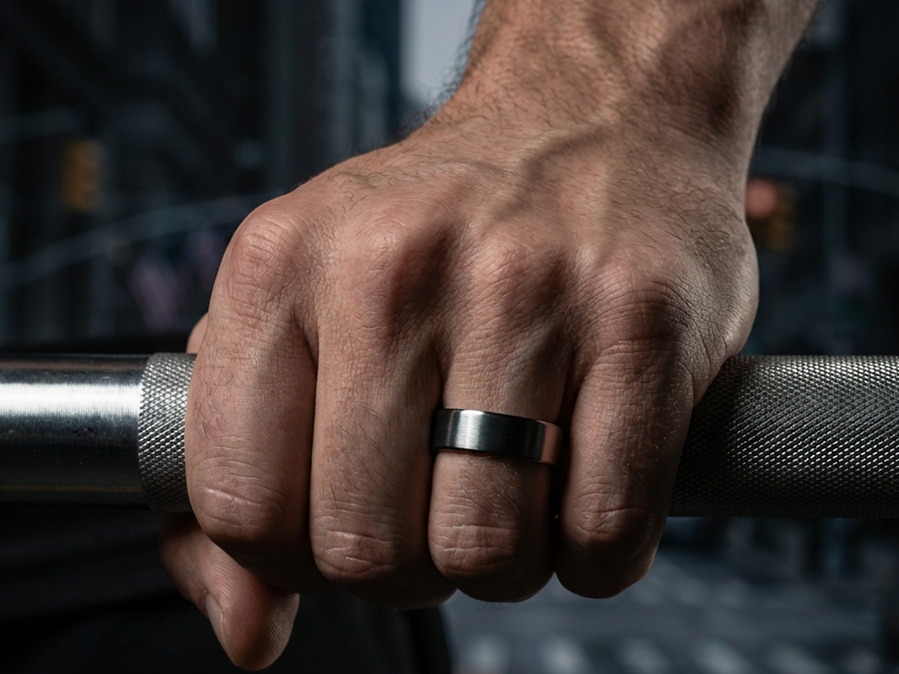
The Ares Ring is designed for real life—24/7 wear through work, training, sleep, showers. The fit has to be locked in from day one. If it spins or slips, it needs proper adjustment.
What proper fit means
Stays in place when you walk, type, train, shake hands. Doesn't cut circulation. You stop thinking about it. If you keep checking it, it's not adjusted yet.
Open-band advantage
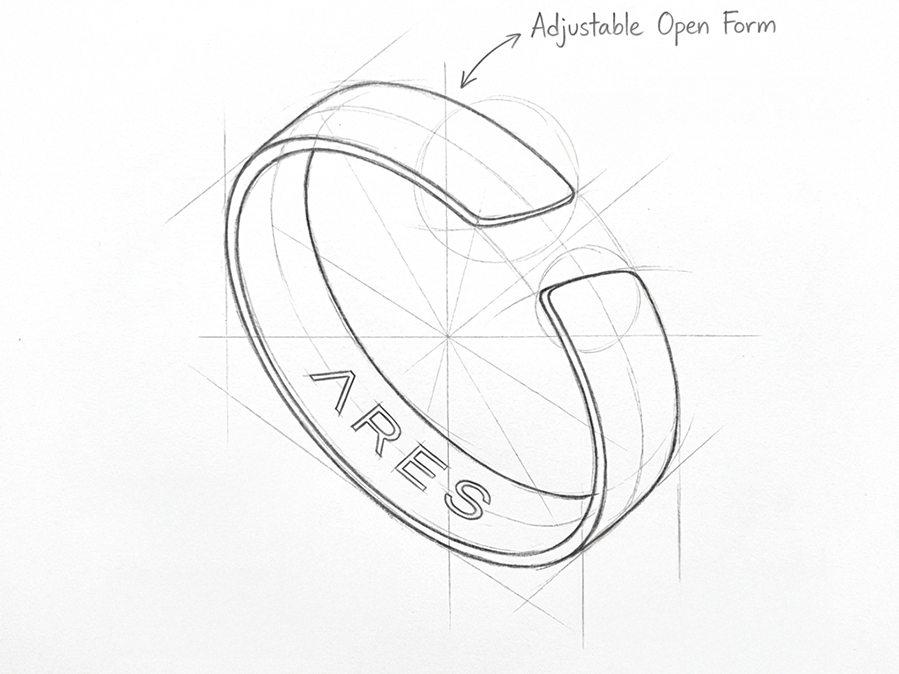
You can tighten if it slides, open if it pinches, micro-adjust for temperature, training, or swelling. Goal: not tight, but stable.
Find your size
- Method A: Use an existing ring Measure inside diameter, match to size chart. Fastest method.
- Method B: Paper strip. Wrap around finger base, mark overlap, measure in mm. Do it at normal hand temperature.
Adjust without damaging
Small steps only. Hands only, no tools. Put ring on, test position. If it slides: gently bring ends closer. If it pinches: gently pull ends apart. Stop, test, micro-adjust again if needed.
Three field tests:
- Drop test: hand down 10 seconds—shouldn't slide to knuckle.
- Wash test: after washing hands—shouldn't spin freely.
- Fist test: make fist 10 times—should stay stable, not bite skin.
Common mistakes
Sized up just in case—too big always rotates. Adjusted on cold hands—ring feels tighter when warm. Forced one hard bend—micro-adjustments win. Wrong finger for your lifestyle—pick the most stable. Adjusting for knuckle not base—base is where it lives.
The standard
When fit is right: stays locked, feels natural, becomes part of your presence. If you're still thinking about it, adjust again. Once it's dialed, you forget it's there—and that's when the magnetic field does its work uninterrupted, 24/7.